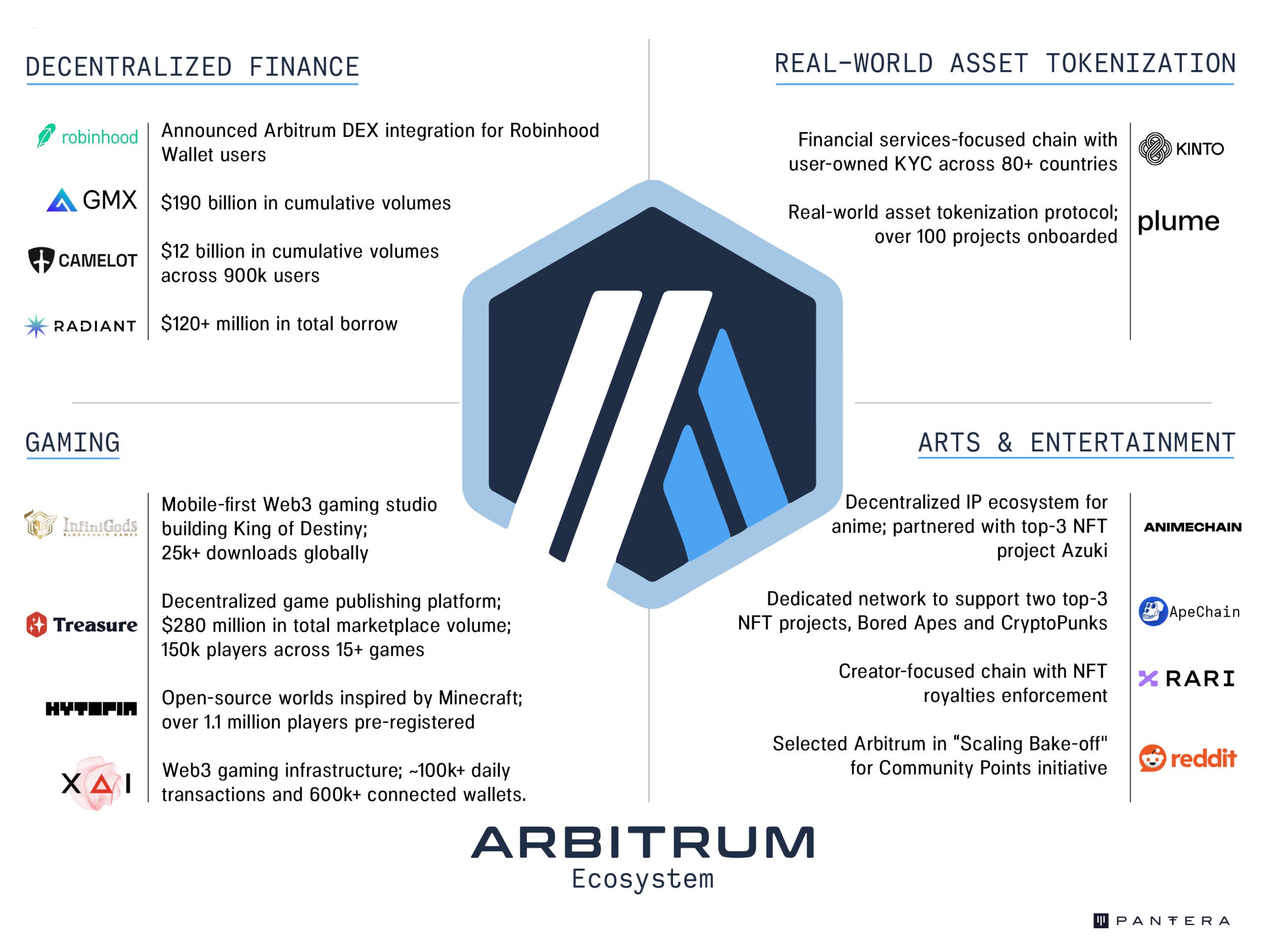
The Scale of Arbitrum’s Perp DEX Market
Arbitrum has established itself as the dominant hub for decentralized perpetual trading, moving beyond niche experimentation to become a primary infrastructure layer for programmable markets. According to official communications from the Arbitrum team, the ecosystem now supports over $1.2 billion in total open interest.
This milestone is driven by a concentrated cluster of high-liquidity protocols, with platforms like Variational leading the charge. The growth signals a shift in trader preference: capital is flowing toward Layer 2 solutions where transaction costs are low and execution speed is high, without sacrificing the self-custody principles of decentralized finance.
This guide maps that specific ecosystem. We will break down the top protocols by liquidity depth, fee structures, and unique features, helping you identify which platform aligns with your trading strategy. Whether you are a high-frequency trader or a long-term position holder, understanding the landscape is essential for minimizing slippage and maximizing efficiency.
Core infrastructure and price feed models
The backbone of any Arbitrum perpetual DEX is its ability to price assets accurately and settle trades without a central authority. This infrastructure relies on two main pillars: how the protocol fetches market data (oracles) and how it matches orders (liquidity models). Understanding these mechanics is essential for assessing slippage risk and capital efficiency.
Oracle sources: Chainlink vs. proprietary feeds
Price feeds are the most critical component for preventing arbitrage and ensuring fair execution. Most protocols on Arbitrum utilize Chainlink for its robust security and decentralized network of data providers. Chainlink oracles aggregate data from multiple centralized exchanges, smoothing out transient volatility and reducing the risk of price manipulation attacks.
Some protocols have developed proprietary oracle systems or hybrid models to reduce latency further. While these can offer faster updates, they often sacrifice some degree of decentralization. When evaluating a protocol, check if the oracle source is transparent and whether it includes a fallback mechanism in case of data feed failure.
Liquidity models: Vaults vs. Peer-to-Peer
Once the price is established, the protocol must facilitate the trade. The two dominant models on Arbitrum are isolated vaults and peer-to-peer (P2P) matching.
Isolated Vaults (AMM-style): In this model, each trading pair is backed by a dedicated pool of liquidity. Traders interact with the pool, similar to a spot DEX. This model is simpler to audit and isolates risk; if one pool drains, others remain unaffected. However, it can suffer from lower capital efficiency as capital is not shared across pairs.
Peer-to-Peer (P2P): This model matches long and short positions directly against each other or against a central liquidity provider. This approach often offers better capital efficiency and deeper liquidity for large orders, as it doesn't rely on a fixed pool size. However, it introduces counterparty risk and requires more sophisticated risk management systems to ensure the protocol remains solvent during extreme market moves.
GMX, Variational, and Mycelium: Head-to-Head
The Arbitrum perp DEX landscape is dominated by a few heavyweights, each optimizing for a different segment of trader. GMX remains the liquidity king, but newer entrants like Variational and Mycelium are carving out niches with lower fees and specialized asset offerings. Choosing the right platform depends on whether you prioritize depth of liquidity, fee efficiency, or access to volatile altcoin pairs.
To clarify the differences, here is a direct comparison of the core metrics across the top protocols.
| Protocol | Maker/Taker Fees | Max Leverage | Key Assets |
|---|---|---|---|
| GMX | 0.1% / 0.1% | Up to 50x | BTC, ETH, LINK, ARB |
| Variational | 0.02% / 0.05% | Up to 50x | BTC, ETH, SOL, TRX |
| Mycelium | 0.03% / 0.05% | Up to 50x | BTC, ETH, PEPE, WIF |
| Rage Trade | 0.05% / 0.05% | Up to 100x | BTC, ETH, DOGE, SHIB |
GMX’s model is straightforward: it charges a flat fee structure and offers up to 50x leverage on a curated list of blue-chip assets. This simplicity attracts institutional-grade liquidity, making it the safest bet for large orders where slippage matters more than marginal fee savings. If you are trading BTC or ETH, GMX’s order book depth is unmatched on Arbitrum.
Variational and Mycelium compete on cost. Variational slashes maker fees to 0.02%, appealing to high-frequency traders who need tight margins. Mycelium follows a similar low-fee structure but distinguishes itself by listing high-volatility meme coins like PEPE and WIF, which GMX excludes. Rage Trade pushes the envelope further with 100x leverage, catering to speculative traders willing to accept higher liquidation risk for amplified exposure.
The choice is rarely binary. Many traders split their activity: using GMX for large, stablecoin-backed positions and rotating to Variational or Mycelium for smaller, high-beta trades where fee efficiency and asset variety matter more.
Execution strategies and risk management
Trading perpetuals on decentralized exchanges requires a sharper edge than spot trading. You are not just betting on price direction; you are navigating liquidity pools, oracle delays, and funding rates. A solid execution strategy separates sustainable traders from those who get liquidated by a single wick.
1. Use limit orders to control slippage
Market orders on DEXs can be expensive due to slippage, especially in lower-liquidity pools. Limit orders allow you to set a precise entry or exit price, protecting your capital from sudden volatility. Platforms like dYdX and GMX have integrated advanced order types that mimic traditional exchange features, giving you more control over your trade execution.
2. Implement dynamic position sizing
Never risk more than 1-2% of your total portfolio on a single trade. Use a calculator to determine the optimal position size based on your stop-loss distance. This ensures that a single bad trade won't wipe out your account. Adjust your position size dynamically based on market volatility; reduce size during high-volatility periods to protect your capital.
3. Monitor funding rates closely
Funding rates are periodic payments between long and short traders to keep the perp price close to the spot price. If funding rates are extremely positive, longs are paying shorts, signaling a potentially overheated market. Conversely, negative funding rates suggest shorts are paying longs. Use these rates to gauge market sentiment and avoid entering positions against the current flow.
4. Set stop-losses and take-profits
Automated stop-losses are essential for risk management. They exit your position if the price moves against you by a certain percentage, limiting your losses. Take-profit orders lock in gains when your target price is reached. Combine these with trailing stops to protect profits as the trade moves in your favor.
5. Verify oracle latency and health
DEXs rely on oracles to fetch price data. Oracle delays or failures can lead to unfair liquidations or missed trades. Before executing a large trade, check the oracle's status and latency. Some platforms offer insurance funds to cover oracle-related losses, so understand the risks involved.
Pre-trade checklist
Before opening any position, ensure you have:
- Checked oracle latency and health.
- Set stop-loss and take-profit orders.
- Verified funding rates for the asset.
- Calculated position size based on risk tolerance.
- Reviewed the platform's liquidation mechanism.
Essential tools for execution
To execute these strategies effectively, you need the right tools. Here are some essential items for your trading setup:


As an Amazon Associate, we may earn from qualifying purchases.
Market overview
Stay updated with real-time market data to make informed decisions. Use live widgets to track prices and trends.
Tracking Market Data and Charting Integration
Live data tools are the difference between guessing and knowing. When trading perpetuals on Arbitrum, you need to see price action as it happens, not as it was an hour ago. Static screenshots or delayed feeds leave you exposed to slippage and sudden volatility spikes. Real-time charts give you the context you need to manage risk effectively.
A live charting widget is essential for this. It anchors your analysis to current market conditions, allowing you to spot trends, support levels, and breakouts instantly. For example, watching a live ETH/USD chart helps you gauge the broader market sentiment before entering a position on a specific protocol.
Relying on official sources like the Arbitrum Portal ensures you are looking at accurate, verified data. This trust in the data source is just as important as the data itself. When you know the numbers are real, you can focus on strategy rather than verification.
Frequently asked questions about arbitrum perp dex
What is the Arbitrum DeFi ecosystem?
The Arbitrum DeFi ecosystem is a network of decentralized protocols built on the Arbitrum One and Nova chains. It leverages Layer 2 scaling to transform traditional financial products into trustless, transparent systems that operate without intermediaries. For perpetual DEXs, this means lower gas fees and faster settlement times compared to Ethereum mainnet, enabling high-frequency trading strategies that are otherwise cost-prohibitive.
How is an ecosystem mapped?
Mapping the Arbitrum perp DEX landscape follows a structured design process. First, identify all active players—protocols, liquidity providers, and aggregators—involved in service delivery. Next, place the user at the center of the map, positioning these entities in relation to their specific utilities, such as leverage ratios or asset support. Finally, analyze the map to highlight pain points, such as fragmented liquidity or high slippage, which reveals gaps where new protocols or strategies can add value.
Why use a perp DEX on Arbitrum instead of a CEX?
Perpetual DEXs on Arbitrum offer non-custodial trading, meaning you retain control of your private keys throughout the trading process. This eliminates the counterparty risk associated with centralized exchanges, where funds are held in custodial wallets. Additionally, Arbitrum’s rollup technology provides near-instant finality and significantly lower transaction costs, making it economically viable for traders to manage positions with smaller capital allocations.
No comments yet. Be the first to share your thoughts!