Why Arbitrum leads perp DEX volume
Arbitrum has become the primary settlement layer for perpetual DEXs, a position built on Ethereum's security but optimized for the high-frequency demands of derivatives trading. Unlike generic rollups, Arbitrum’s architecture allows for complex smart contract interactions without the prohibitive gas costs that stifle other networks. This infrastructure advantage has attracted the most sophisticated liquidity providers and trading protocols, creating a network effect that sustains its dominance.
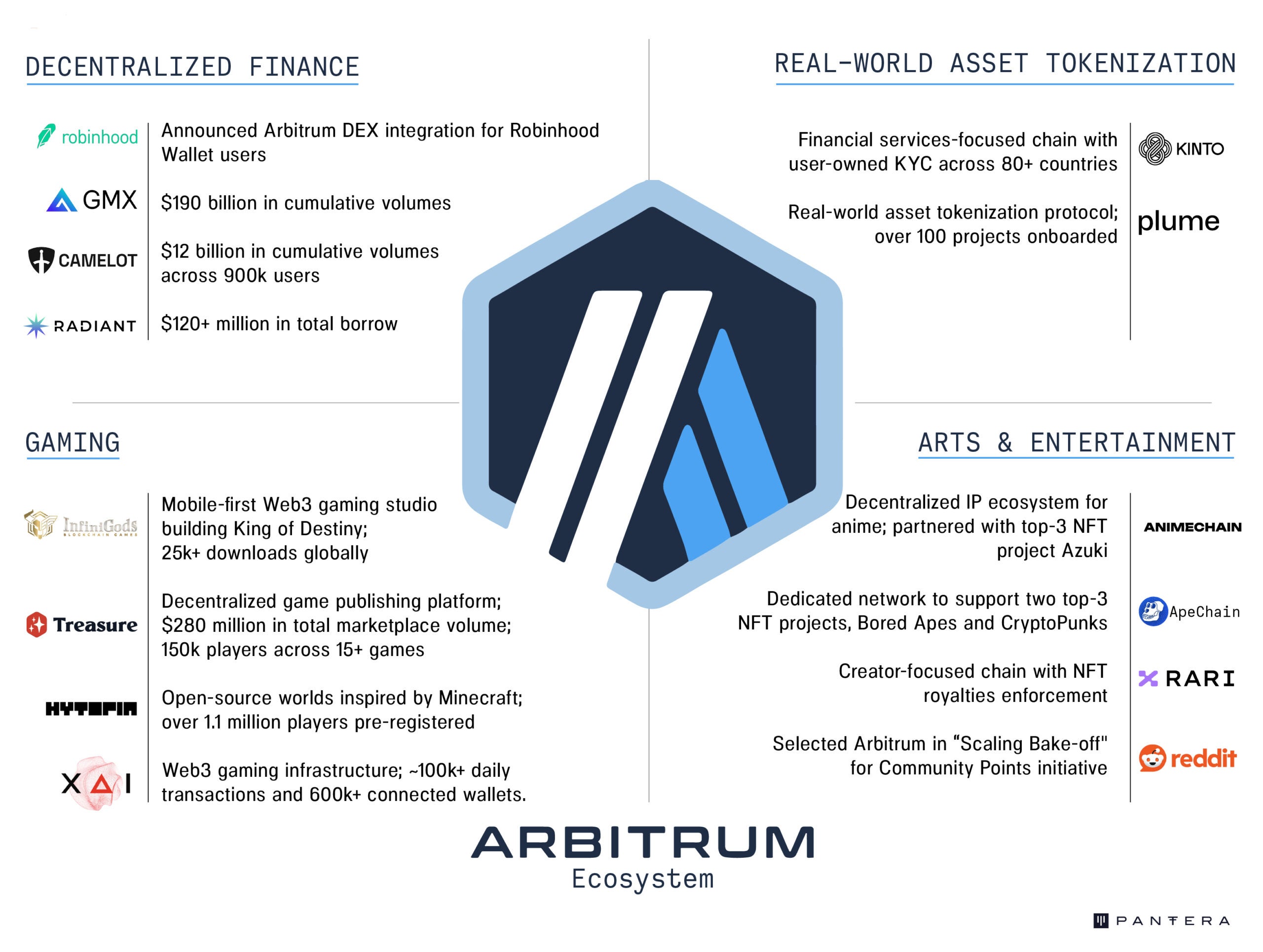
The ecosystem’s depth is evident in the volume processed by its native protocols. One major perp DEX, which launched early on the network, has already processed over $360 billion in volume, establishing itself as a foundational liquidity layer. This isn't just about raw numbers; it's about the stability and depth of the order books that these protocols maintain. Traders prefer Arbitrum because they can execute large positions with minimal slippage, a direct result of the concentrated liquidity pools found here.
This concentration of activity creates a self-reinforcing cycle. As more volume flows in, more liquidity is attracted, which in turn draws more traders. For anyone mapping the perp DEX landscape, ignoring Arbitrum is not an option. It is the central hub where the majority of decentralized derivatives activity settles. Understanding its specific mechanics is the first step in navigating the broader market.
Core Infrastructure Layers
Perpetual DEXs on Arbitrum do not operate in a vacuum. They sit on top of a specific technical stack that prioritizes low latency and Ethereum-level security. Understanding this stack is essential for mapping the ecosystem, as it dictates which protocols can realistically compete on speed and cost.
The Rollup Foundation
Arbitrum is an Optimistic Rollup (ORU). This means it processes transactions off-chain and posts compressed data back to Ethereum. For perp traders, this architecture is critical. It allows for high throughput without the gas fees that plague Layer 1 networks. The "optimistic" part refers to the fraud proof system: transactions are assumed valid unless challenged within a dispute window. This design choice enables the fast finality required for leveraged trading strategies.
Oracles and Price Feeds
Perp DEXs rely on accurate price data to prevent liquidation sniping and arbitrage. Arbitrum uses decentralized oracle networks, primarily Chainlink, to feed real-time market data. These oracles aggregate prices from multiple exchanges to create a single, reliable reference price. If the oracle data is stale or manipulated, the entire trading mechanism fails. Therefore, the health of the oracle network is as important as the liquidity pool itself.
Bridging and Capital Efficiency
Capital enters Arbitrum through bridges, primarily the official Arbitrum Bridge. These bridges lock assets on Ethereum and mint wrapped equivalents on Arbitrum. While newer bridges exist, the official bridge remains the standard for security and liquidity depth. The efficiency of this bridge determines how quickly traders can move capital between layers. Slow bridges can lead to missed opportunities during high-volatility market events.
| Layer | Function | Key Risk |
|---|---|---|
| Rollup | Transaction processing | Fraud proof delays |
| Oracle | Price data | Data manipulation |
| Bridge | Asset transfer | Smart contract vulnerability |
Key perp DEX protocols mapped
Use this section to make the Arbitrum Perp DEX Ecosystem Mapping Analysis decision easier to compare in real life, not just on paper. Start with the reader's actual constraint, then separate must-have requirements from details that are merely nice to have. A practical choice should survive normal use, maintenance, timing, and budget. If a recommendation only works in an ideal situation, call that out plainly and give the reader a fallback path.
| Factor | What to check | Why it matters |
|---|---|---|
| Fit | Match the option to the primary use case. | A good deal still fails if it does not fit the job. |
| Condition | Verify age, wear, and service history. | Hidden condition issues erase upfront savings. |
| Cost | Compare purchase price with likely upkeep. | The cheapest option is not always the lowest-cost option. |
How to execute trades on Arbitrum
Trading perps on Arbitrum requires a specific workflow that leverages low gas fees while navigating fragmented liquidity. Success depends on selecting the right aggregator and managing slippage, rather than simply picking the highest-leverage position. The ecosystem’s structure rewards precision.
Start by connecting your wallet to a multi-protocol aggregator like 1inch or Matcha. These tools route your order across GMX, Synthetix, and other venues to find the best price. Aggregation is critical because Arbitrum’s liquidity is not centralized in a single order book. Without this step, you may face significant slippage on larger positions.
Even with L2 fees, gas spikes can impact execution during high volatility. Use a live price widget to track ETH and ARB. A sharp drop in ARB often correlates with increased trading volume and network congestion. Timing your entry when gas is low ensures your margin isn’t eroded by transaction costs before the trade even settles.
Perp DEXs on Arbitrum often use automated market makers (AMMs) or hybrid models. Set slippage to 0.5% or lower for stable pairs, and up to 1% for volatile assets like BTC or ETH. Higher tolerances increase the risk of front-running. Always review the estimated price impact before confirming the swap or leverage adjustment.
Market orders execute instantly but at the current best bid/ask. Limit orders allow you to set a specific entry price, which is vital in a fragmented market. Many Arbitrum aggregators support limit orders that sit on-chain, waiting for liquidity to reach your price. This reduces the need for constant monitoring and improves average entry prices.
Arbitrum’s speed allows for rapid liquidations. Use isolated margin rather than cross-margin to cap your risk to a single position. Set stop-losses directly on the DEX interface if available. Avoid max leverage; even a 1% wick against you can wipe out your position. Conservative leverage preserves capital during Arbitrum’s inherent volatility.
Technical analysis remains essential for timing entries. Monitor the broader crypto market trends using live charts to identify support and resistance levels before opening a position.
Arbitrum vs. Base: Perp DEX Landscape
Arbitrum holds a structural advantage in perpetual DEX infrastructure, but Base is closing the gap with aggressive user acquisition. The choice between chains often comes down to liquidity depth versus onboarding friction.
Arbitrum’s mature ecosystem features deep order books and established protocols like GMX and Aevo. This depth reduces slippage for large traders and provides a stable environment for sophisticated strategies. Base, by contrast, leverages Coinbase’s distribution to attract retail volume, though its perp DEX liquidity remains fragmented across newer entrants.
Data from DefiLlama shows Arbitrum maintaining higher total value locked (TVL) in perps, yet Base sees spikes in transaction count driven by social trends. For institutional players, Arbitrum’s infrastructure offers reliability. For high-frequency retail traders, Base’s lower gas costs and ease of access present a compelling alternative. The gap is narrowing, but Arbitrum’s ecosystem mapping reveals a more robust foundation for serious trading.
Helpful gear
Use these product recommendations as a starting point, then choose the size, material, and price point that fit how you actually use the gear.

As an Amazon Associate, we may earn from qualifying purchases.
No comments yet. Be the first to share your thoughts!